Skip to content

Stage one

The world's smartest filter

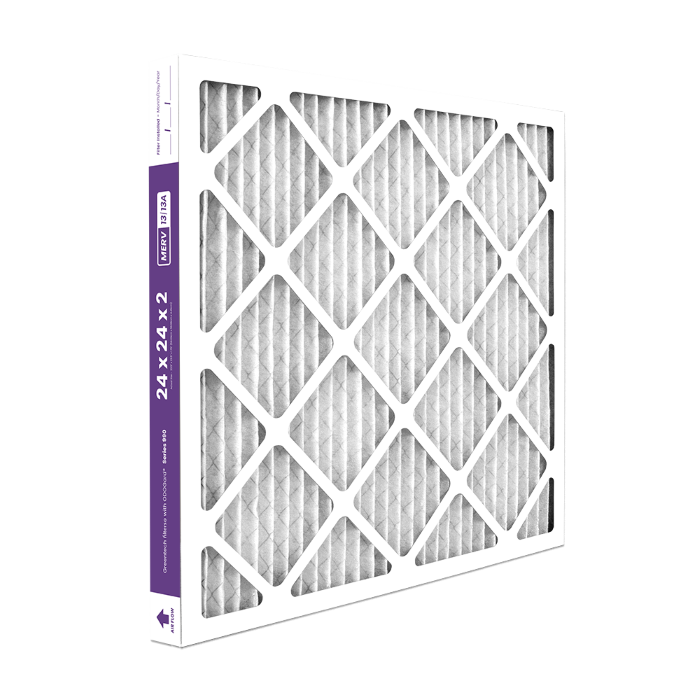
Two filters in one, capturing particulates and gas-phase contaminants together.

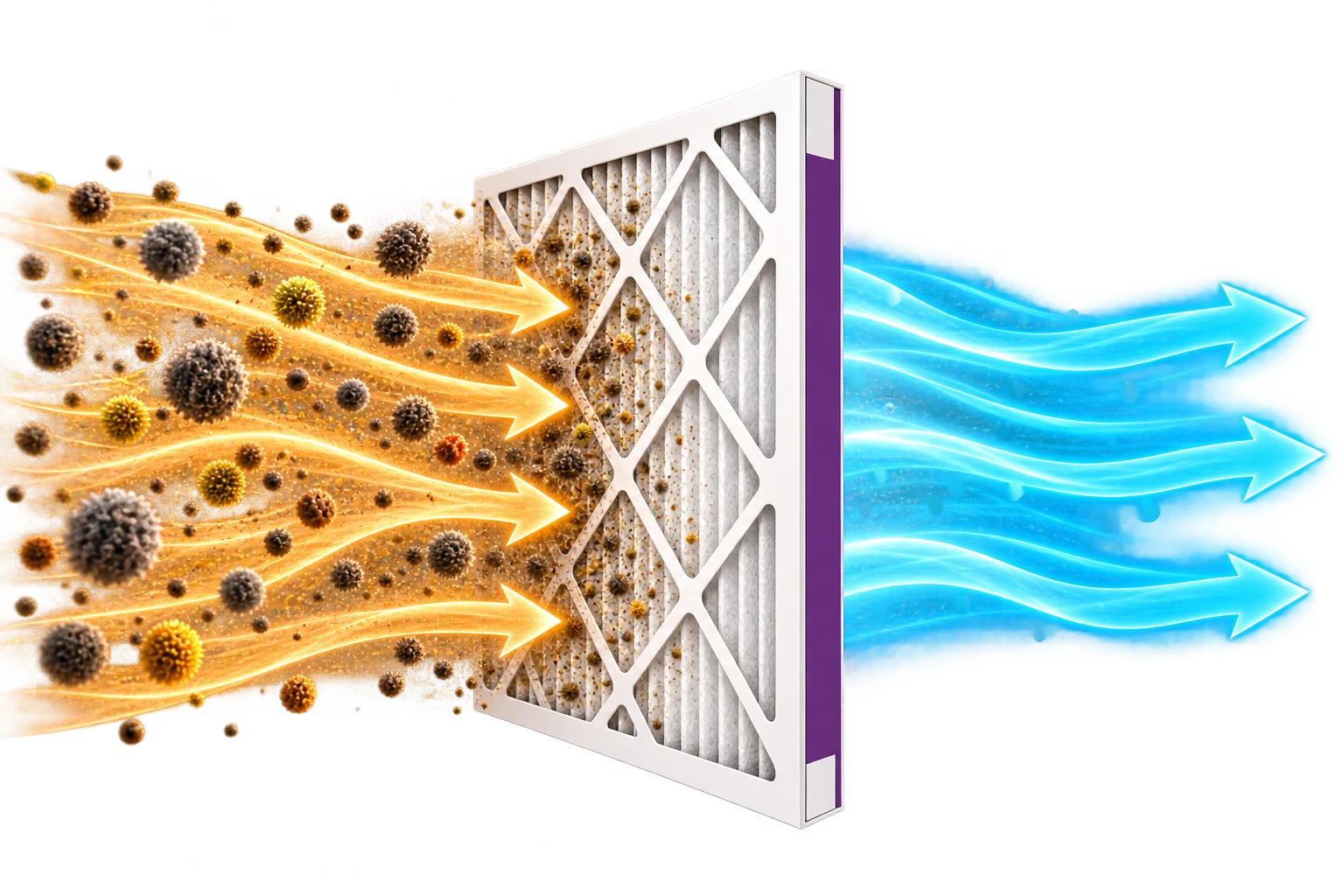
Contaminated air passing through a MERV 13A filter and leaving clean

Most filters do one job: they hold particles. Ours holds particles and destroys the gas-phase compounds a mesh could never catch, such as odours, VOCs and formaldehyde, at a molecular level in the media itself.

Raw Material Achievement Award, National Air Filtration Association. An independent industry award, given for the filter media itself rather than for anything written about it.

Nanofiber technology

A MERV rating that still holds at the end of the filter's life.

Most high-efficiency filters are rated on day one. They lean on an electrostatic charge to reach that number, and the charge fades as the media loads, so the filter you are running in month six is not the filter you were sold. Ours carries the A designation, which certifies the rated efficiency is still being delivered at the end of its service life. The structure is what sustains it: fibres spun 411 times thinner than a human hair through a nonwoven substrate.

  • Fibres spun 411× thinner than a human hair
  • Rated efficiency certified to end of service life, not just when new
  • Air resistance of a MERV 9, so it is hospital-grade filtration your fan can still breathe through
  • Holds its rating in humid air, where charge-dependent media fall away fastest
  • Sealed frame with no bypass, so air cannot slip around the media
  • Built with 50% less synthetic material than comparable filters, and recyclable
ODOGard®

Gas-phase contaminants cannot be filtered. They have to be broken down.

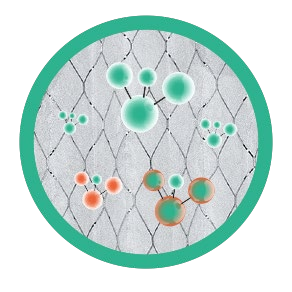
ODOGard® is embedded into the nanofibre itself during manufacture, infused through the core structure of the media rather than sprayed onto its surface. It neutralises odour compounds and volatile organic compounds at a molecular level instead of adsorbing them, and unlike carbon it does not take up moisture doing it. That last point matters in the Gulf: a carbon filter in humid air spends its capacity on water vapour.

What ODOGard® treats

  • Pet odours
  • Cooking odours
  • Smoke odours
  • Terpenes
  • VOCs
MERV 13A nanofiber filter with ODOGard coating
  • Captures ultra-fine particles

    Down to 0.3 microns, including smoke, bacteria and virus carriers that pass straight through a standard return filter.

  • Eliminates odours & VOCs

    ODOGard® technology addresses gas-phase contaminants at a molecular level, not by holding them in the media.

  • Protects your HVAC system

    Hospital-grade filtration achieved without the pressure drop that causes breakdowns and inflated maintenance bills.

  • Recyclable

    The media is recyclable at end of life, so improving air quality does not simply move the problem elsewhere.

And what it does for the system

Increased airflow
A lower resistance across the media means the system moves more air for the same effort.
Easier on the plant
Less strain on fans and motors, which is where filtration usually costs a building money.
Saves energy
The fan is not fighting the filter, so the same cooling is delivered for less power.
High-capacity design
More media surface area, so the filter holds more before it needs changing.
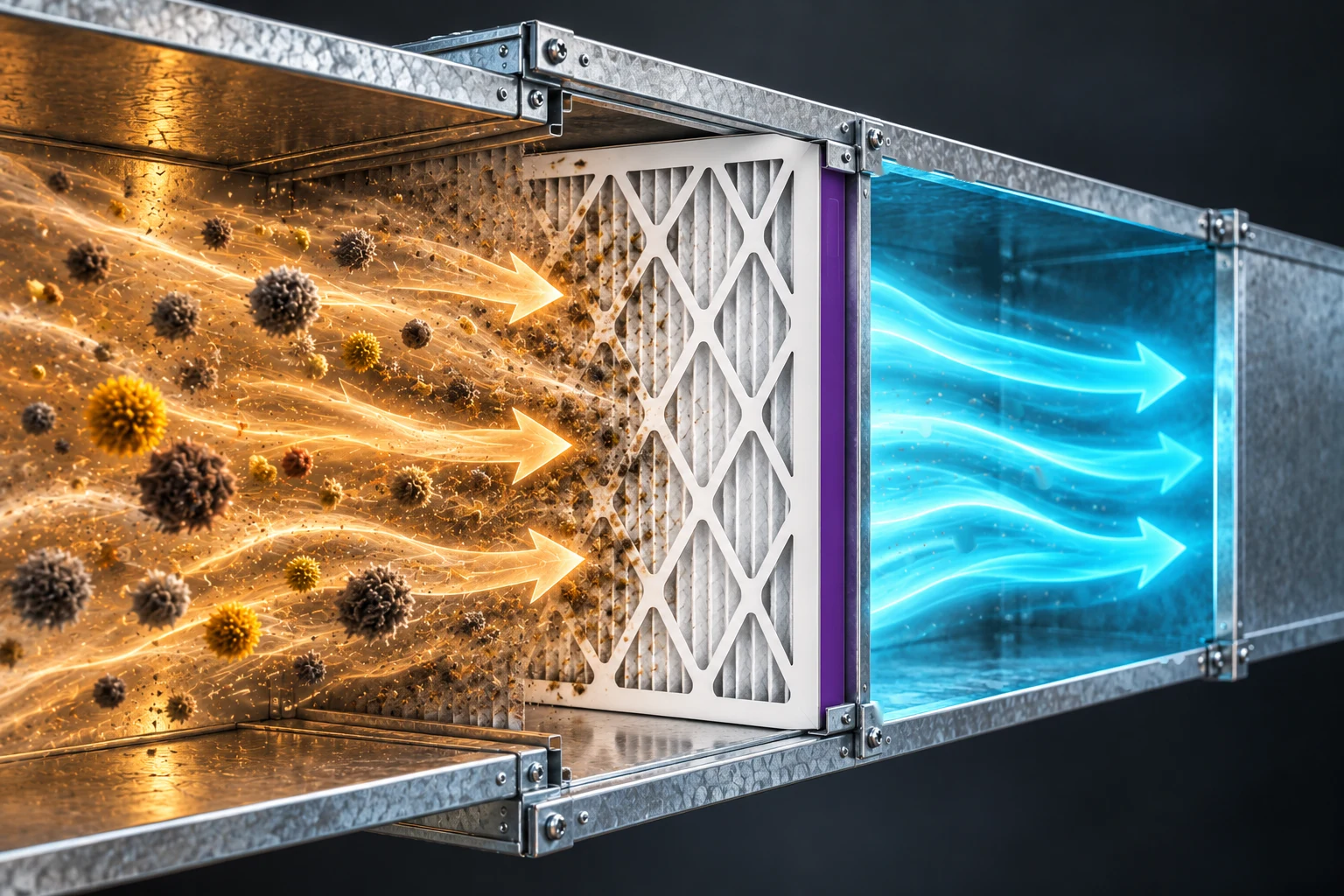
A MERV 13A filter fitted in ductwork, capturing particles from the incoming air

In the system

The return filter is replaced.

Air entering the system passes through MERV 13A nanofibre media with ODOGard®. Particulates are captured and gas-phase compounds are destroyed in the media, before any of it reaches the fan coil or the ductwork.

Efficacy

What each rating actually captures.

The jump from MERV 11A to 13A is where bacteria and virus carriers start being caught at all. It is the reason we specify 13A as standard.

Particulate capture by MERV rating across three particle size bands
ParticulateMERV 8AMERV 11AMERV 13A
Coarse particles 10.0 – 3.0 μm
PollenCapturedCapturedCaptured
Dust & mitesCapturedCapturedCaptured
Pet danderCapturedCapturedCaptured
Fine particles 3.0 – 1.0 μm
OdoursCapturedCapturedCaptured
VOCsCapturedCapturedCaptured
SmokeNot capturedCapturedCaptured
MouldNot capturedCapturedCaptured
Ultrafine particles 1.0 – 0.3 μm
BacteriaNot capturedNot capturedCaptured
Virus carriersNot capturedNot capturedCaptured

Most Gulf air conditioning systems run a washable mesh return filter, which sits below MERV 8. It does not appear on this table at all.

Three stages

Capture, bond, destroy.

A carbon filter holds an odour molecule until it is full, then releases it. ODOGard® does something different: it changes the molecule permanently, so nothing is stored and nothing comes back.

    01

    Capture

    Odours and VOCs are trapped in the ODOGard®-coated nanofibre media as air passes through it.

    02

    Bond

    The coating forms a permanent chemical bond with the VOC and odour molecules it has caught.

    03

    Destroy

    Their molecular structure is altered for good, leaving inert compounds. The odour is gone rather than stored.

  • Patented and proprietary coating
  • Proven in indoor grow facilities, among the most extreme odour environments there are
  • 100% non-toxic
  • 100% biodegradable

Against carbon

Transform your existing HVAC into a more effective air treatment system.

Activated carbon is the default answer to odour and VOCs. It adsorbs: it holds molecules on a surface until that surface is saturated, and in humid Gulf air a good share of that capacity is spent on water vapour rather than on what you wanted removed.

Greater VOC reduction

140%

Greater VOC reduction

versus carbon filters

Greater odour reduction

99%

Greater odour reduction

versus carbon filters

Less synthetic material

50%

Less synthetic material

than comparable filters

Nanofibre removes

  • Bacteria
  • Dust
  • Dust mites
  • Pollen
  • Mould

ODOGard® destroys

  • VOCs
  • Food odours
  • Pet odours
  • Terpenes

Series 990

Occupied spaces

  • Offices
  • Residential
  • Education
  • Hospitality
  • Long-term care

Series 3500

Heavy odour loads

  • Food processing
  • Animal facilities

Against the alternatives

Every other filter makes you choose.

Filtration normally forces a trade. Raise the efficiency and you lose airflow. Add carbon for odours and you get nothing for fine particulate, and in humid Gulf air it spends much of its capacity on water vapour. The point of this media is that it does not ask you to pick.

Capability comparison: filters commonly found in buildings, against the Eco AirTech Filters+ MERV 13A
Filters found in most buildings, not supplied by usOur filter
CapabilityStandard MERV 8True HEPAActivated carbonFilters+ MERV 13A
Coarse dust, pollen, danderYesYesNoYes
Ultrafine particulate (0.3–1 μm)NoYesNoYes
Gas-phase VOCs and formaldehydeNoNoYesYes
Destroys odours rather than storing themNoNoPartialYes
Rating holds as the filter loadsYesYesNoYes
Low pressure drop, no airflow penaltyYesNoNoYes
Unaffected by humidityYesYesNoYes
Retrofits existing ductworkYesNoPartialYes

A true HEPA captures more fine particulate than any MERV-rated media, and we would never claim otherwise. What it cannot do is fit most existing air handling systems without a substantial pressure-drop penalty, and it does nothing at all for gas-phase contamination. Filters+ delivers a MERV 13A rating at the air resistance of a MERV 9, and treats the gas phase in the same pass.

Get in touch

Start with the building, not a quote.

We begin by understanding the environment and what's actually driving the problem: the building, the air handling, and how the space is really used. What you get back is a specification built around that, not a quote against a template.

  1. 1

    We review what you've told us and come back within one working day.

  2. 2

    A site assessment covering the space, the air handling system, and what's actually driving the problem.

  3. 3

    A written specification and a fixed price, including the ongoing service interval.

hello@eco-airtech.com

Dubai, United Arab Emirates

Or message us on WhatsApp

We'll only use your details to respond to this enquiry.